Why Use Power Backup Products?
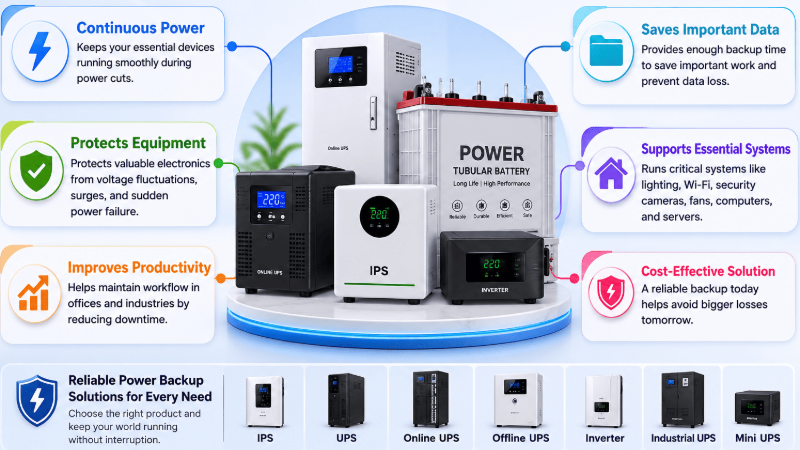
Power interruptions can happen at any time and may affect your home, office, business, or industrial operations. A sudden power cut can stop important work, interrupt internet and computer systems, affect machinery, and even cause problems for sensitive electrical equipment. Power Backup Products provide a reliable solution by supplying backup power when the main electricity goes out.
Products such as IPS, UPS, Online UPS, Offline UPS, Inverters, Industrial UPS, and Mini UPS are designed for different power requirements. They help keep essential devices and equipment running during power interruptions, allowing you to continue your work without unnecessary downtime.
Power backup systems are especially useful for homes, offices, small businesses, factories, and industrial facilities where continuous electricity is important. They can support computers, servers, networking equipment, lights, fans, security systems, machinery, and other essential electrical devices.
A good power backup solution can also help protect equipment from sudden power failure and unstable electricity. With the right system, you can improve power reliability, reduce interruptions, protect important equipment, and maintain smooth daily operations.
Whether you need backup power for a small home setup or a large industrial facility, choosing the right Power Backup Product helps ensure dependable performance whenever you need it most.